For decades, industrial workers faced a common and frustrating dilemma: maximum workplace protection often meant enduring heavy, rigid, and fatiguing footwear during long, grueling shifts. Fortunately, recent breakthroughs in material science have triggered a major evolution in how modern safety shoes are engineered, proving conclusively that heavy-duty defense no longer requires sacrificing day-long comfort.
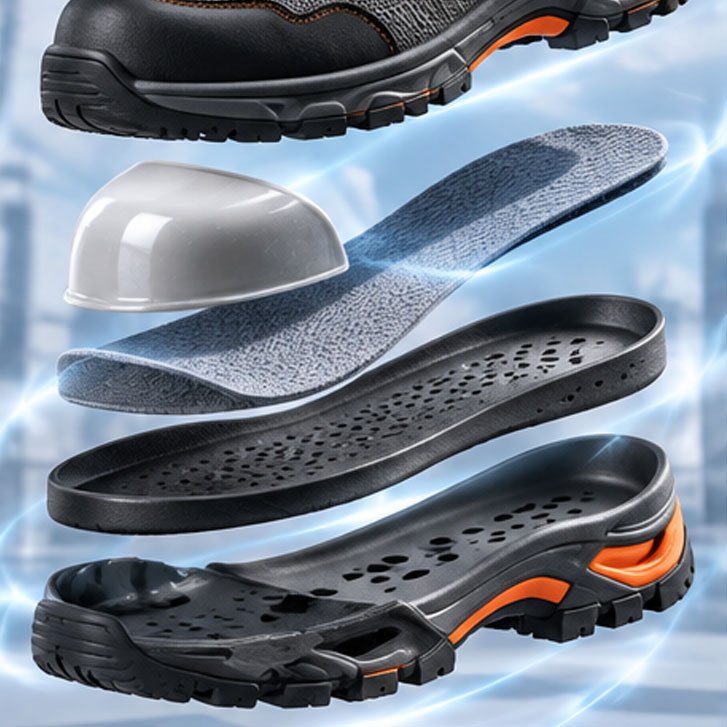
The core transformation lies in replacing traditional heavy components with advanced technical alternatives. Today’s high-end protective boots frequently utilize composite or fiberglass toe caps. These non-metallic components deliver equivalent impact and compression resistance to traditional steel while remaining completely thermally non-conductive and significantly lighter. Similarly, high-strength Kevlar or multi-layer technical textile midsoles have replaced heavy steel plates, offering flexible, full-foot puncture resistance without adding unnecessary weight or restricting natural foot movement.
Furthermore, advanced midsole cushioning technologies, such as injection-molded EVA and ergonomic polyurethane foams, absorb high levels of shock impact when workers stand or walk on hard concrete floors for hours. This reduction in physical strain directly minimizes muscle fatigue and improves daily workplace productivity. Most importantly, when safety shoes feel lighter, more flexible, and more comfortable, employees are far more compliant with daily personal protective equipment policies, drastically reducing the overall incidence of workplace injuries.